Republished by Newlife - Flexstone. All rights belong to the original publisher; see Source below.
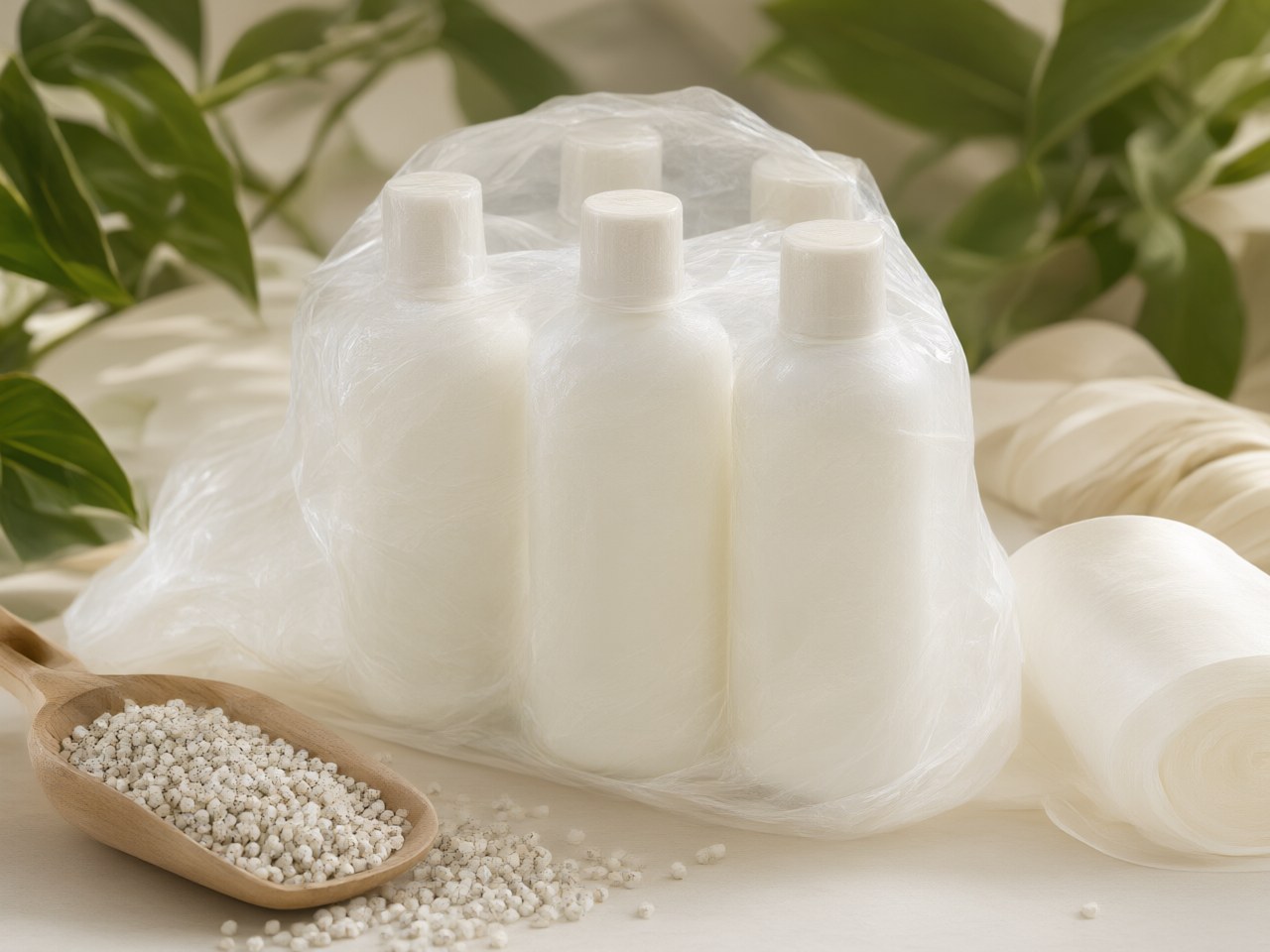
A four-company collaboration has delivered a collation shrink film containing 22% post-consumer recycled (PCR) content for Nivea skincare packaging in India, proving that sustainability goals and mechanical performance do not have to be mutually exclusive.
Nivea, the multinational skincare brand owned by German parent company Beiersdorf, set a Net Zero target for 2045. To help its Indian manufacturing facility work toward that goal, the company partnered with Green Worms, a post-consumer recycled content producer; Vardhaman Polypacks, a film converter based in Daman, India; and ExxonMobil Signature Polymers to integrate PCR polyethylene into shrink packaging used for products such as body lotion bottles and tubs.
"This four-party collaboration demonstrated how value-chain partnerships can help deliver scalable film solutions with sustainability benefits such as incorporation of PCR content without compromising on quality," according to the case study.
PCR content target
The team initially targeted at least 20% PCR content in the collation shrink film. Working together, ExxonMobil Signature Polymers' technical team and Vardhaman Polypacks' film conversion expertise combined with high-quality PCR granules supplied by Green Worms — produced from Category II flexible waste such as milk pouches, trash liners and general liners — to create a film built around Exceed™ Stiff+ m 0238 performance polyethylene.
The resulting film, produced on a 1/1/1 layer ratio line, ultimately surpassed the original goal, achieving a 22% PCR content dosage.
Performance did not suffer as a result. The film delivered superior machine direction and transverse direction (MD-TD) shrinkage balance, meaning it shrank uniformly in both directions. That compares favorably with the reference film, where transverse direction shrinkage was notably high. The new solution also showed improved tensile properties, including elongation and energy to break, compared with the incumbent virgin film.
Incorporating PCR content into film structures often introduces gel formations that can weaken mechanical performance, a known industry challenge. Despite sourcing PCR granules from a range of varying flexible waste streams, the film maintained excellent puncture performance and tensile strength. During validation testing, the packaging also held its integrity after passing through the shrink tunnel.
Green Worms specializes in collecting dry ocean-bound plastic waste across Kerala, Tamil Nadu and the Andaman region in India. The company recently expanded into flexible plastic waste recycling, producing PCR pellets from Category II plastic waste at its recycling facility. Vardhaman Polypacks, meanwhile, has long supplied collation shrink films to Nivea and brought that converting experience to the project alongside ExxonMobil Signature Polymers' resin technology.
ExxonMobil Signature Polymers is the unified portfolio brand bringing together ExxonMobil's polyolefin products. The brand is designed to simplify navigation across the company's polymer offerings and to promote closer collaboration across the plastics value chain, from resin producers to converters and brand owners.
Sustainability focus
The project illustrates a growing trend among consumer goods companies: pursuing recycled content targets for flexible plastic packaging without sacrificing the shrink performance, puncture resistance and tensile strength that protect products during shipping and retail display. As more brand owners set ambitious sustainability targets, collaborations spanning waste collection, recycling, film conversion and resin technology are emerging as a model for scaling PCR adoption in demanding packaging applications.
For Nivea, the project represents measurable progress toward its 2045 Net Zero target while maintaining the packaging performance its FMCG skincare products require. The companies involved say the approach could serve as a template for other brand owners seeking to reduce reliance on virgin plastics without compromising packaging quality or shelf performance.
Source
- Plastics Today (2026-11-03) - Original article: Nivea, Partners Achieve 22% Recycled Content in Shrink Film - https://www.plasticstoday.com/packaging/nivea-partners-achieve-22-recycled-content-in-shrink-film