How Do You Run Water-Immersion and Grease Tests for Laminate-Free Waterproof Stone Paper Menus?
Run two tests on finished, fully cured menu prints made with your production press and ink: a water-immersion and adhesion check, and a grease, stain and wipe check. Flexstone® stone paper can carry that menu without lamination. The product sheet lists an IPX8 rating based on 72-hour immersion with zero delamination, and the sheet contains no wood fibre. The ink layer still has to survive the spills, sauces and sanitiser wipes the restaurant uses, so agree the trial method and the pass criteria before you start.
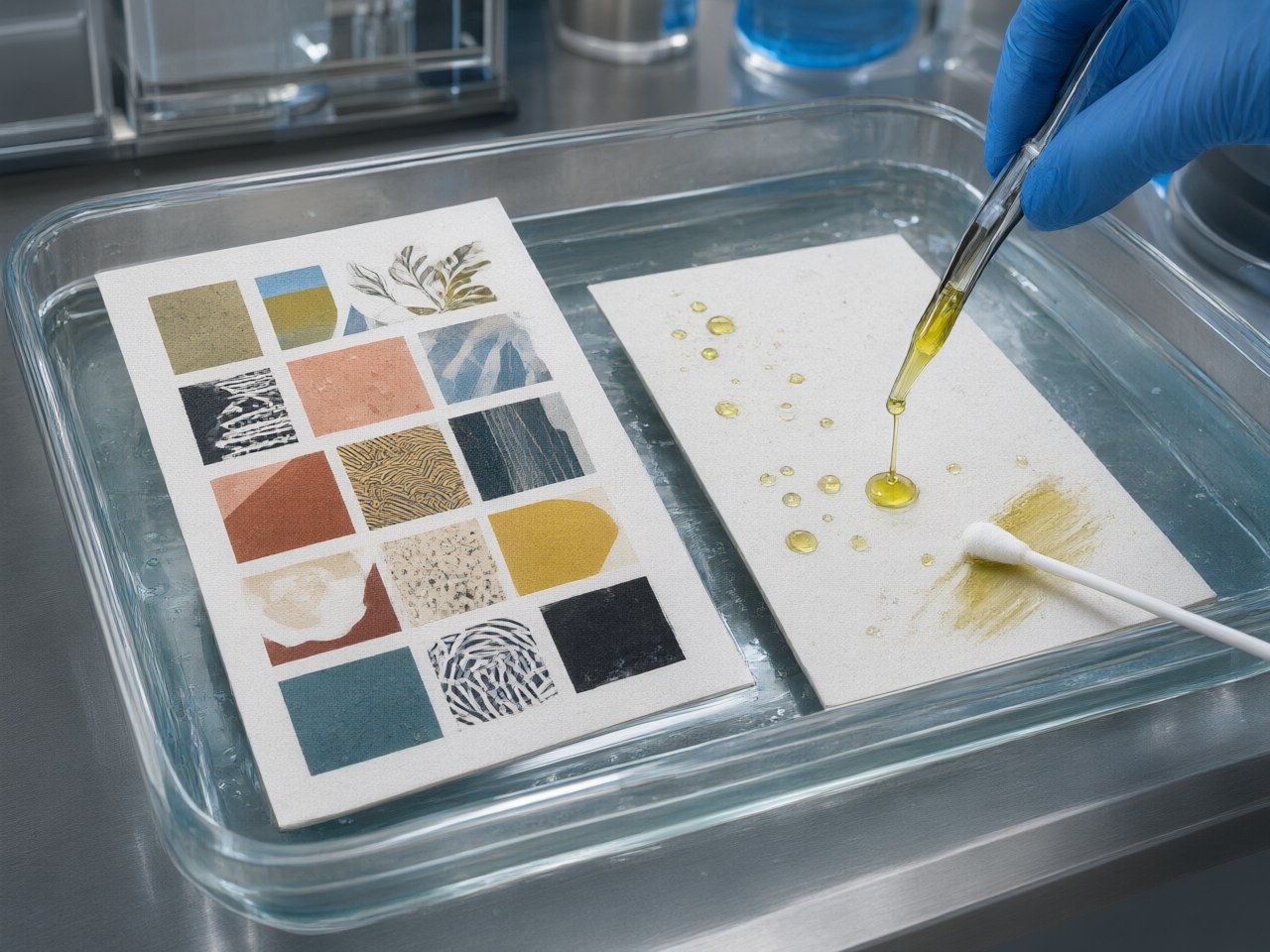
- Immersion and adhesion: soak the printed sheets, then check ink lift, edges, flatness and tape adhesion. - Grease, stain and wipe: apply the kitchen's real soils, leave them for an agreed dwell, then clean with the customer's own routine.
The sections below set out the protocol, the Flexstone model groups that match each press, and the fit limits for menu work.
Why Laminate-Free Menus Are Gaining Ground
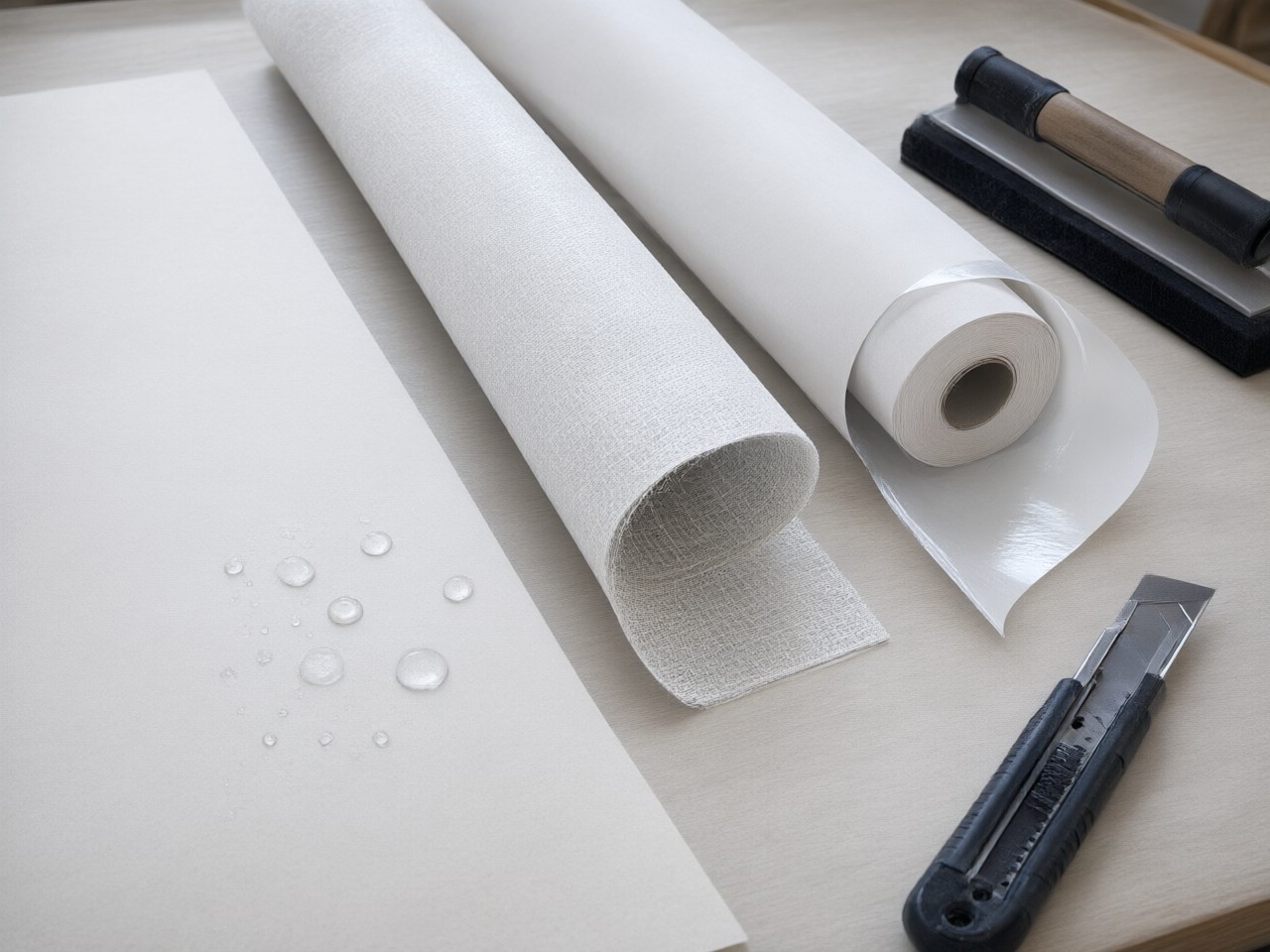
Laminate-free menus suit short-run cards that must survive wet handling without an extra film. Flexstone fits that job because it is calcium carbonate bound with thermoplastic resin and contains no wood fibre, so it does not swell, cockle or tear the way wood-pulp board does when soaked. Two trade-offs come with that construction:
- Stone paper does not absorb ink vehicle. Ink anchorage relies on the surface coating, so the coating code has to match the press. See Printing on Stone Paper. - At the same thickness, stone paper is heavier than most paper. A thick FG card feels substantial, and larger sheets add weight in a binder.
Matching the Flexstone Model Group to Your Menu Press
Choose the model group that matches the press, then trial that grade. The table lists only data published for each group.
| Model group (source) | Print process | Published data relevant to menus | Test focus |
|---|---|---|---|
| FS / FG 2K, 0.15–0.30 mm sheets (NMEQS-MACO 293) | Offset, press-side UV-curable ink, flexo, screen; not compatible with HP Indigo; dry toner must be tested first | Gloss 4–6° / 9–12°; long-term (days) 80℃; short-term (minutes) FS 100℃, FG 120℃ | Ink set-off and cure before immersion; rub of offset ink |
| FG digital-print grades: FG-2I, FG-I15-PSA, FG-I20-PSA (NMEQS-MACO 298) | HP Indigo, dry toner, UV-curable, offset, screen. FG-I15-PSA and FG-I20-PSA are adhesive-backed | Gloss 3–8°; long-term (days) 80℃, short-term (minutes) 120℃; sheets 460 × 320 mm and 480 × 330 mm | Toner or ElectroInk adhesion after oil contact and sanitiser wipes |
| FS-2I / FM-2I (brochure only) | HP Indigo only | Nominal grammage only | Adhesion and wipe trial; no published heat or optical data |
| FM-2K and 0.35 mm 2K grades (brochure only) | Offset and press-side UV-curable ink | Nominal grammage only | Adhesion and wipe trial; no published heat or optical data |
| Non-adhesive S-coated inkjet rolls, example FG-S27 (inkjet media series) | (Weak) solvent, HP Latex, wide-format UV inkjet | FG-S27: 370 ± 37 g/m², 12-month shelf life. Series supply form: 50 m rolls, widths 1270 / 1370 / 1524 mm | Dry and cure time before immersion; Latex ink scuff under wipes |
Two process notes:
- On 2K sheets and FG digital grades, "UV" means UV-curable ink on a press. On S-coated rolls it means wide-format UV inkjet. FS / FG 2K 0.20–0.30 mm rolls are also listed under NMEQS-MACO 296 for wide-format UV inkjet. FS-S22-PSA and FS-S27-PSA are marked HP Latex only. - Poster-size menu boards can use the non-adhesive S-coated rolls, or the NMEQS-MACO 296 rolls on wide-format UV inkjet. Bound and table menus use 2K sheets or the digital grades.
Product families: offset / UV media, digital press media and inkjet media.
A Practical Water-Immersion Protocol for Printed Menus
The product sheet bases the IPX8 rating on 72-hour immersion with zero delamination, under the manufacturer's stated conditions. Use the steps below to check the printed sheet. Agree times and pass criteria with the customer first.
1. Prepare representative prints. Include solids of each process colour, a rich black, fine type and any spot varnish. Trim with the production cutter. 2. Cure fully, then condition. Condition the prints before immersion at 30–60% relative humidity, the working environment published for spec-sheet models. Brochure-only grades have no published conditioning window; record the room conditions you actually use. Offset and Latex prints must be fully dry or cured before soaking.
3. Immerse. Submerge the sheets in tap water at room temperature for the 72-hour duration used on the product sheet, and for any shorter soak the restaurant treats as its worst case. Keep an unsoaked control from the same run. 4. Inspect wet, then after drying. Look for ink lift, blistering, colour bleed, edge whitening and curl. Blot the sheets and let them dry before the adhesion check. 5. Check adhesion. Run a cross-cut tape test in the style of ISO 2409 or ASTM D3359 on the soaked samples and the control. Compare the ratings.
Record pass or fail against the agreed criteria, such as no visible ink removal and no drop in tape-test class.
Grease, Sauce and Sanitiser Wipe Testing
Spec sheets and the product sheet do not publish oil-resistance or chemical-resistance data for printed Flexstone. Treat the following as a sample-test checklist.
Soils. Use what that restaurant serves, such as vegetable oil, chilli oil, soy sauce, tomato ketchup, coffee or red wine. Strongly coloured oils and sauces are the stains to watch.
Dwell. Apply a drop or smear on solids and on text. Agree two dwells: a spill that is wiped up in service, and a spill left until closing. If menus sit near hot plates, limit use and any warm trial to the use environment published for spec-sheet models: -20℃ to 60℃, 20–80% relative humidity, and a temperature change of less than 15℃ within 30 minutes. That use environment is not the process heat-resistance limit. Heat-resistance data are listed separately in the table (long-term 80℃; short-term FS 100℃, FG 120℃) and must not be used as the use limit. Brochure-only grades have no published use-environment or heat data; trial them separately and do not apply 100℃ or 120℃.
Cleaning. Wipe with the customer's routine, and count the cycles. Estimate the count as wipes per shift × shifts × days over the service period you are qualifying. If menus are washed, include that wash method in the same trial.
Checks. After cleaning, record ink transfer onto a white cloth, gloss change against the control, residual stain or halo, and legibility of small type.
If the ink rubs off and the substrate stays intact, change the ink set or finish the UV cure, then retest. Trial any overprint varnish on a sample against the same checks before you adopt it.
Where Stone Paper Menus Have Limits
- Catalogue grades are warm white and opaque. Clear menu sleeves and transparent table-tent windows need a clear film. - Food-contact compliance and other certifications are not stated in the Flexstone data. - Outdoor durability is lower than PVC. Long-term outdoor signage is outside the recommended use. It can replace PVC where outdoor durability is not required. - Retort, steam cooking and other very high-temperature processes are not suitable for Flexstone. - End-of-life routes in the Flexstone data are pulverising for remanufacture and energy recovery. Post-consumer recovery depends on local sorting and the recycler.
FAQ
Does IPX8 mean my printed menu is waterproof? The product sheet bases that rating on 72-hour immersion with zero delamination. Confirm ink and varnish with the protocol above.
Can I print laminate-free menus on HP Indigo? Use I / 2I grades. The 2K grades in NMEQS-MACO 293 are listed as not compatible with HP Indigo. For dry-toner presses, use the FG digital grades (FG-2I, FG-I15-PSA, FG-I20-PSA).
How should I store menu stock between reprints? For spec-sheet models, keep stock in its original packaging, out of direct sun, at 20–70% relative humidity. Shelf life is 12 months. Reseal opened packs. Spec sheets other than NMEQS-MACO 293 require opened material to be used within one month. Brochure-only grades have no published storage conditions.
Is FG better than FS for menus? FG (density 1.4) is stiffer and suits a single card or table menu. FS (density 1.0) is softer and more paper-like, which suits folded or bound menus. Choose by hand-feel and binding style.
Next Steps for Your Menu Trial
1. Match the press and ink to a model group in the table. 2. Agree pass criteria with the restaurant: immersion time, soils, dwell and wipe count. 3. Read the relevant spec sheets on Downloads before the trial. 4. With the sample request, send the press and ink set, sheet size or roll width, thickness and density series, whether the job is adhesive-backed and what surface it will meet, and the use environment and expected service life. 5. Contact the Newlife - Flexstone team for samples and spec sheets: stonepapers.net/en/contact.
References
1. IEC 60529, Degrees of protection provided by enclosures (IP Code). International Electrotechnical Commission. Code definition only; the Flexstone IPX8 mark is the product-sheet statement in item 5. 2. ISO 2409, Paints and varnishes — Cross-cut test. International Organization for Standardization. 3. ASTM D3359, Standard Test Methods for Rating Adhesion by Tape Test. ASTM International. 4. Guangzhou Newlife New Material Co., Ltd. Spec sheets NMEQS-MACO 293, 296 and 298 (Rev. A0). https://www.stonepapers.net/en/downloads 5. Guangzhou Newlife New Material Co., Ltd. Flexstone product sheet: IPX8 rating based on 72-hour immersion with zero delamination. 6. Flexstone inkjet media series. https://www.stonepapers.net/en/products/inkjet-media