Which Stone Paper Grade Suits Roll-Up Banners and Display Stand Graphics? Choosing Thickness and Stiffness
For roll-up banners and display stand graphics, start with unbacked Flexstone® S-coated wide-format inkjet rolls. They are listed for (eco-)solvent, HP Latex and wide-format UV inkjet, in two density series (FS = 1.0 g/cm³, soft and paper-like; FG = 1.4 g/cm³, stiff) at 0.22, 0.27 and 0.32 mm.
The rest of this guide narrows that range for your printer, your hardware, and how long the graphic needs to last.
Stone Paper Options for Roll-Up and Display Stand Graphics
Flexstone is listed for indoor posters, roll-up banners, display stand graphics, retail windows and exhibition displays printed on (eco-)solvent, HP Latex and wide-format UV inkjet. According to the display graphics application page, it lies flat without wrinkling and avoids the orange-peel texture of low-density PP pearl film. It can replace PVC where outdoor durability is not required.
Choosing a grade comes down to three decisions:
- Coating, which must match the printer. - Density series, which sets the hand and stiffness. - Thickness, which is the main lever on stiffness and weight.
Self-adhesive constructions are for prints mounted on a stand panel. A roll-up graphic is rewound, so it uses an unbacked roll.
| Model group | Coating / print process | Thickness · density | Grammage | Source | Role in roll-ups and stands | Limits |
|---|---|---|---|---|---|---|
| FS inkjet rolls (S), unbacked | (Eco-)solvent, HP Latex, wide-format UV inkjet | 0.22 / 0.27 / 0.32 mm · 1.0 g/cm³ | Nominal 220 / 270 / 320 g/m² | Inkjet Media series for thickness and 50 m rolls. Grammage: t(mm) × 1.0 × 1000 | Lighter, softer banners and hanging graphics | Formula values. Check hang flatness on tall formats |
| FG inkjet rolls (S), unbacked | (Eco-)solvent, HP Latex, wide-format UV inkjet | 0.22 / 0.27 / 0.32 mm · 1.4 g/cm³ | FG-S27: 370 ± 37 g/m² published. Nominal 308 g/m² (0.22 mm) and 448 g/m² (0.32 mm) | Inkjet Media series for the thickness set; FG-S27 published grammage | 0.27 mm starting point for roll-up cassettes; 0.32 mm first test for corner-held stands | 0.32 mm is the heaviest unbacked S option per m². 308 and 448 are formula values |
| FS / FG 2K rolls | Wide-format UV inkjet | 0.20–0.30 mm | See sheet | NMEQS-MACO 296; Offset / UV series | Alternative for shops printing wide-format UV inkjet | Thickness set differs from the S rolls. Confirm stocked thicknesses on the sheet. Sheet 2K grades listed only for press inks are a separate supply form |
| FS-S22-PSA / FS-S27-PSA | HP Latex only | 0.22 / 0.27 mm FS face | See sheet | Self-adhesive inkjet series | Graphics mounted on stand boards | Listed for HP Latex only |
| K-PSA | Wide-format UV inkjet only | See sheet | See sheet | NMEQS-MACO 294 | UV-printed graphics mounted on stand panels | Medium-tack permanent PSA. Take face and total thickness from the sheet for this construction; take other K-PSA codes from their own sheets |
| K-coated DPA film | Wide-format UV inkjet only | See sheet | See sheet | NMEQS-MACO 303 | Mounted panels that need air-release application | Published removal condition: smooth surfaces, indoors, within 6 months |
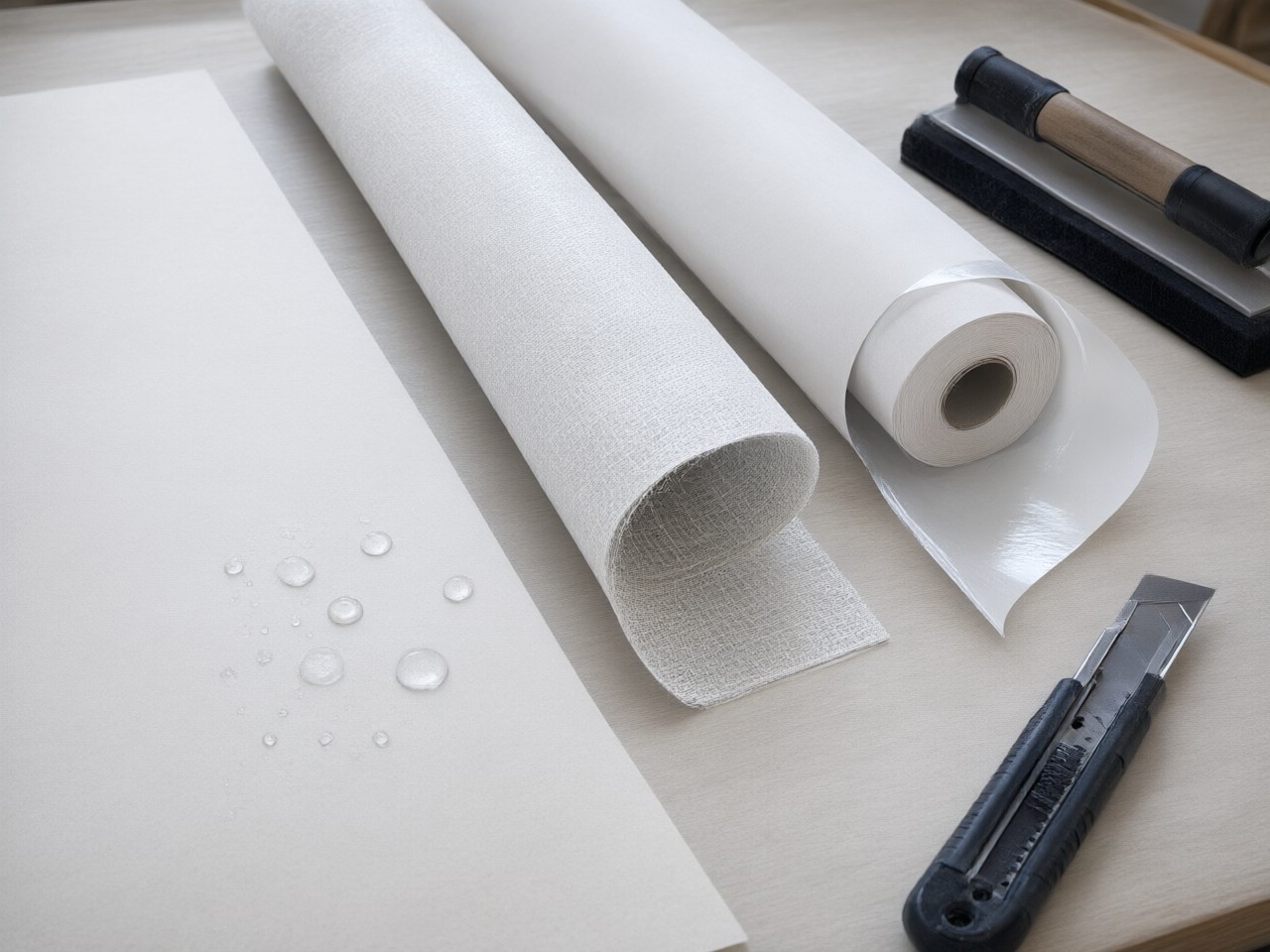
Unbacked S-coated inkjet rolls are supplied as 50 m rolls in 1270, 1370 and 1524 mm widths. FS-K15-PSA-80G and FS-K20-PSA-80G are offered in 1270 and 1370 mm. Confirm width and total thickness on the current spec sheet before quoting.
Thickness Drives Stiffness, Weight and Roll Yield
Thickness is the variable that changes most between these grades. Two relationships are enough to compare them before samples arrive.
Grammage of unbacked grades. For grades without adhesive, nominal grammage is:
grammage (g/m²) ≈ thickness (mm) × density (g/cm³) × 1000
FG-S27 works out to 0.27 × 1.4 × 1000 ≈ 378 g/m², within the published 370 ± 37 g/m². Use the published figure wherever one exists. Use the formula only where no grammage is published, and quote those results as nominal.
Panel mass equals area × grammage. For a worked example of 850 × 2000 mm (1.7 m²):
| Grade | Grammage used | Calculated mass |
|---|---|---|
| FS, 0.22 mm | 220 g/m² nominal | 0.37 kg |
| FG-S27 | 370 g/m² (published center) | 0.63 kg |
| FG, 0.32 mm | 448 g/m² nominal | 0.76 kg |
On FG-S27, the published ±37 g/m² band is ±10% of 370 g/m², and it scales that panel mass by the same fraction.
A 50 m × 1270 mm roll of FG-S27 is 63.5 m² × 0.370 kg/m² ≈ 23.5 kg of film at the published center, before the core, with that same ±10% band. A wider roll is heavier in proportion to width. Check the total against the printer's media-weight limit before ordering 1524 mm.
Bending stiffness. For a uniform plate, bending stiffness per unit width scales with E·t³ (Timoshenko and Gere). No modulus is published for the S-coated rolls, so absolute stiffness cannot be calculated. Within one density series, if the formulation is unchanged:
- 0.22 → 0.27 mm: (0.27/0.22)³ ≈ 1.85× - 0.27 → 0.32 mm: (0.32/0.27)³ ≈ 1.66× - 0.22 → 0.32 mm: (0.32/0.22)³ ≈ 3.1×
On that nominal basis, moving from 0.27 to 0.32 mm raises grammage by about 19% and estimated bending stiffness by about 66%. Switching from FS to FG also changes stiffness, but no published modulus puts a number on it. These ratios are bending estimates. Sag, edge curl and rewind still have to be checked on the hardware.
Roll-width utilization. When one panel is printed across the roll, width yield before non-printable margins is panel width ÷ roll width:
- 850 mm on 1270 mm: about 67% - 1000 mm on 1270 mm: about 79% - 1200 mm on 1370 mm: about 88% - 1500 mm on 1524 mm: about 98%. The leftover is 24 mm in total, or 12 mm per side if the panel is centered, and the printer's side margins have to fit inside that leftover
If most jobs are 850 mm roll-ups, nesting panels across the roll will cut waste more than changing roll width.
Matching Grade to Hardware Type
Match the grade to how the hardware holds the panel, then confirm on that hardware.
Roll-up (pull-up) cassettes. The graphic is wound into a spring-loaded base, pulled up, and clamped to a top rail. It has to rewind cleanly and then hang flat. Start with 0.27 mm, FG first and FS if a lighter panel is preferred. Run repeated retraction cycles in the customer's cassette, including when the grade has already worked in a different cassette. A very stiff panel can resist the spring on a small-diameter roller, and a very soft one can show edge curl on a tall panel.
X-stands and eyelet-mounted frames. The panel is held at the corners, so stiffness has to keep the middle flat. Start the trial with 0.32 mm FG. The material is tear-resistant, but an eyelet puts the load on a small area. Pull-test punched corners on a sample before a production run.
L-banners, tabletop stands and hanging displays. Weight and handling usually matter more than self-support. FS at 0.22–0.27 mm gives a paper-like hand for retail and hospitality settings.
Rigid stand panels and modular walls. Where the graphic is mounted to a board, use a self-adhesive construction listed for the printer. FS-S22-PSA and FS-S27-PSA are listed for HP Latex only. The K-PSA construction (NMEQS-MACO 294) and K-coated DPA film (NMEQS-MACO 303) are listed for wide-format UV inkjet only.
Print and Finishing Settings to Verify
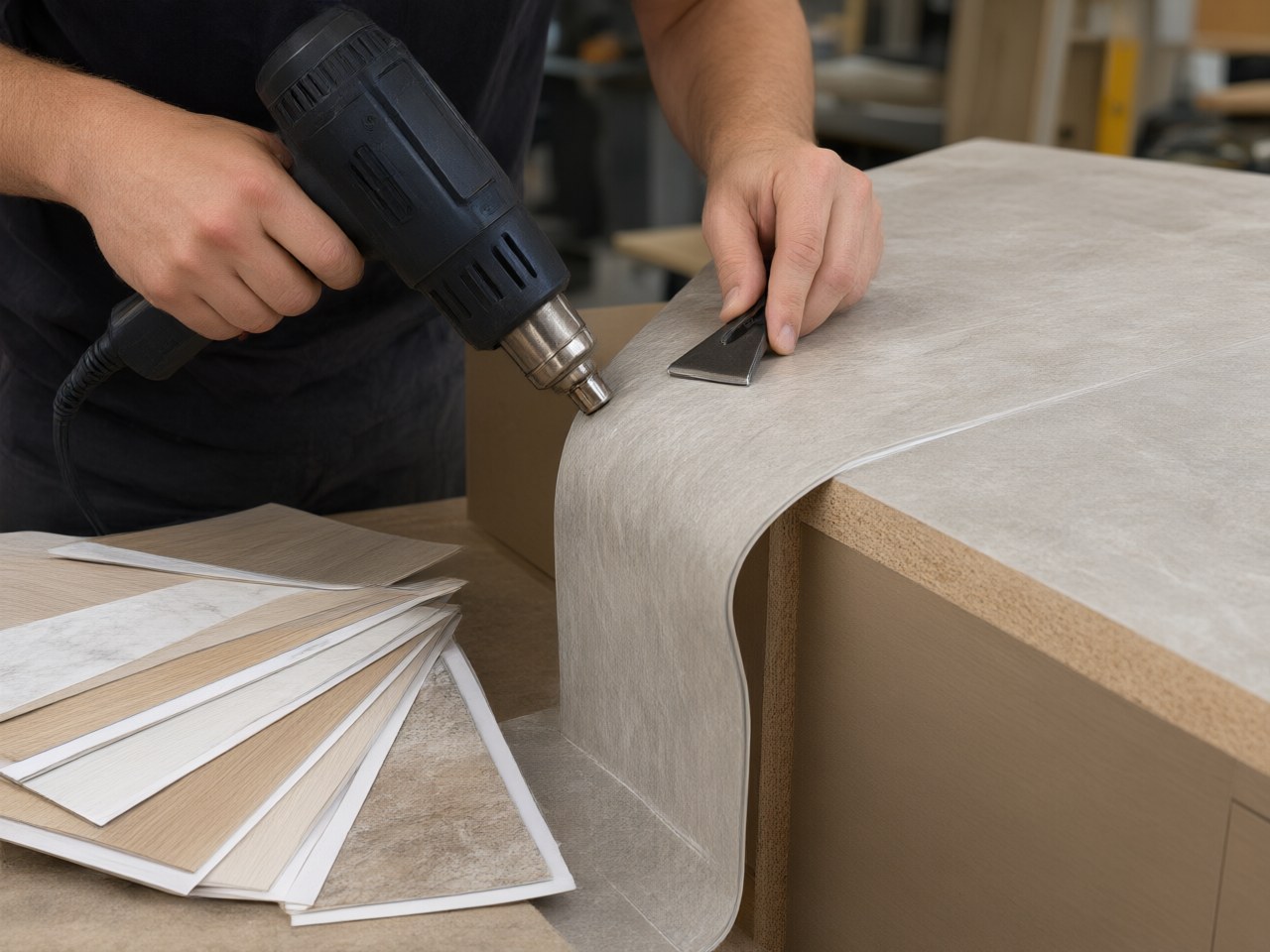
The coating list names the printer family a grade is listed for. It does not supply an ICC profile or a curing temperature. No heat-resistance figure is published for the S-coated inkjet rolls, so any job that sees curing heat or sunlit glazing needs a sample trial. Read printing on stone paper before building a production profile, then check the following on your own equipment:
1. Latex curing. Print a full-coverage swatch at the curing setting you normally use. After it cools, inspect for curl, waviness and dimensional change. Lower the curing temperature only as far as the ink still cures fully. 2. UV inkjet. Use the unbacked S rolls, or the FS/FG 2K rolls in NMEQS-MACO 296. Published heat resistance of the FS/FG 2K 0.15–0.30 mm grades, including those rolls, is 80°C long-term (days) and, for minutes, 100°C on FS or 120°C on FG. S-coated rolls are outside that grade group. Check ink adhesion with a tape test after curing, and fold a swatch around a roller about the diameter of the cassette to look for cracking in dense ink. 3. Solvent and eco-solvent. Let the print outgas before it is rolled into a cassette. Wind a sample and check it for blocking or ghosting before the job is committed. 4. Lamination. No laminate is listed in the published documentation. If the job needs scuff protection, test the laminate on a sample: adhesion, silvering, and whether the laminated panel still rewinds. A laminate adds stiffness and weight beyond the film figures above. 5. Trimming and storage. FG-S27 has a published shelf life of 12 months. Store rolls in the original packaging, out of direct sunlight, and follow the climate window on the spec sheet. Reseal opened rolls. On published spec sheets other than NMEQS-MACO 293, opened material is to be used within one month.
When to Specify PVC, PET or Another Substrate
Stone paper fits indoor exhibition and retail graphics. Some displays need a different material:
- Long-term outdoor stands. Outdoor durability is below that of PVC. A stand that stays outside for months should be printed on PVC. - Fire-classified venues. Where a hall, mall or client specification requires a fire classification, flame-retardant PVC is still required. - Transparent graphics. Catalog grades are warm white and opaque and cannot replace a clear film. - Ultra-light kits. Flexstone is denser than low-density PP pearl film (0.6–0.75 g/cm³ in Newlife's material comparison), so at the same thickness it weighs more per square metre. Where carry weight is the only concern, PP pearl film or a thinner FS grade is lighter. PP pearl film wrinkles more easily. - Very high temperatures.
Spec Sheets, Samples and Trial Prints as Evidence
Published product figures in this guide are the inkjet thickness set, 50 m length and 1270 / 1370 / 1524 mm widths on the inkjet media series page; the published FG-S27 grammage of 370 ± 37 g/m² and 12-month shelf life; and spec sheets NMEQS-MACO 294, 296 and 303 (version A0) from the downloads page. Stiffness ratios, width yield and panel mass are calculations from those inputs.
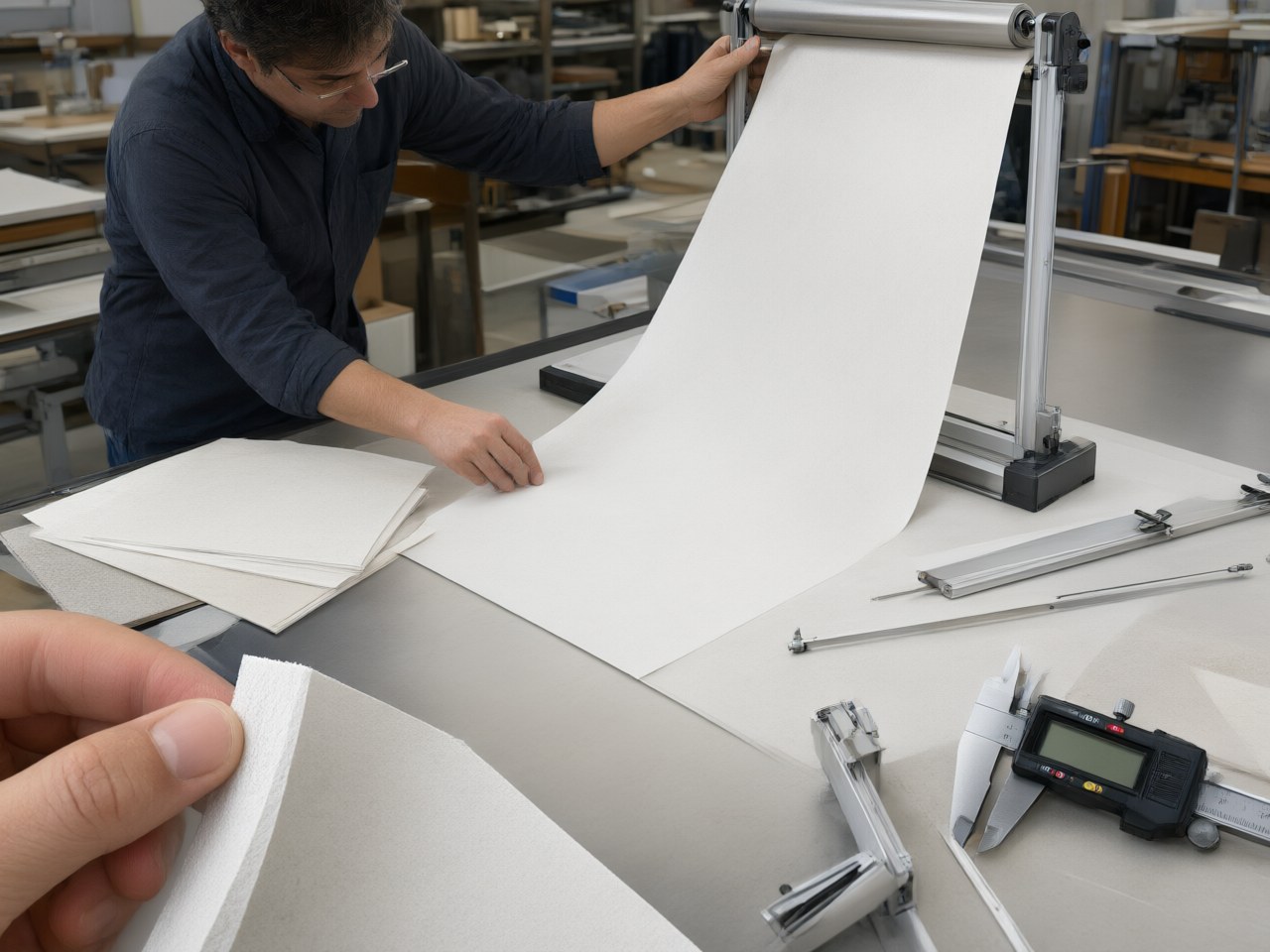
A side-by-side sample is the practical way to close a roll-up specification: FS and FG at two thicknesses, printed on the production printer, then run in the actual cassette and stand. The Flexstone application engineering team can supply sample material and spec sheets, and can discuss custom thickness, width or coating where a standard grade does not fit.
FAQ
Is FG or FS the better start for an 850 mm roll-up? Start with FG-S27 where hang-flat matters. Test FS at 0.27 mm if the client wants a softer hand or a lighter panel. Confirm either grade with retraction cycles in the actual cassette.
Can roll-up graphics run on a UV flatbed or a roll-to-roll UV printer? Use a grade listed for wide-format UV inkjet: the unbacked S-coated rolls, or the FS/FG 2K rolls in NMEQS-MACO 296. Check flatbed vacuum and sheet handling on a sample. A 2K grade listed for offset or UV-curable press inks is the sheet product in that listing.
Why does FS-S27-PSA print poorly on an eco-solvent printer? FS-S22-PSA and FS-S27-PSA are listed for HP Latex only. For solvent printers, use the unbacked S rolls, or a self-adhesive grade listed for that ink.
Does 0.32 mm FG fit every roll-up base? Not necessarily. Some small-diameter cassettes may not rewind it. Trial it before ordering production rolls.
Next Steps for Your Display Graphics Order
Send the following when you request samples and spec sheets:
1. Printer model and ink type: (eco-)solvent, HP Latex, or wide-format UV inkjet. 2. Hardware types (roll-up, X-stand, L-banner, mounted panel) and the usual panel sizes. 3. Roll yield for those sizes on 1270, 1370 and 1524 mm, after printer margins. 4. Two thicknesses and both density series, with panel mass estimated from the formula above. 5. Use environment and duration: indoor, short-term outdoor, and any venue fire requirement. 6. If the graphic is mounted, the surface it will be applied to. 7. Contact the Newlife - Flexstone team for samples and spec sheets: stonepapers.net/en/contact. Include the details above so the sample set matches the printer and the hardware.
References
1. Guangzhou Newlife New Material Co., Ltd. Flexstone wide-format inkjet media (series page). https://www.stonepapers.net/en/products/inkjet-media 2. Guangzhou Newlife New Material Co., Ltd. Wide-format display graphics (application page). https://www.stonepapers.net/en/applications/display-graphics 3. Guangzhou Newlife New Material Co., Ltd. Stone paper compared with PVC, PP pearl film, PET and paper. https://www.stonepapers.net/en/compare 4. Guangzhou Newlife New Material Co., Ltd. Flexstone offset / UV double-sided media (series page; FS/FG 2K rolls, spec sheet NMEQS-MACO 296). https://www.stonepapers.net/en/products/offset-uv-media 5. Guangzhou Newlife New Material Co., Ltd. Spec sheets NMEQS-MACO 294 (K-PSA wide rolls), NMEQS-MACO 296 (2K rolls) and NMEQS-MACO 303 (DPA film), version A0. https://www.stonepapers.net/en/downloads 6. Guangzhou Newlife New Material Co., Ltd. Printing on stone paper (knowledge base). https://www.stonepapers.net/en/knowledge-base/printing-on-stone-paper 7. Timoshenko, S. P., and Gere, J. M. Mechanics of Materials. Flexural rigidity of a uniform plate scales with elastic modulus and the cube of thickness when modulus and Poisson's ratio are constant.