Which Stone Paper Grades Should You Choose for HP Indigo Printing? Choosing Between I and 2I Grades
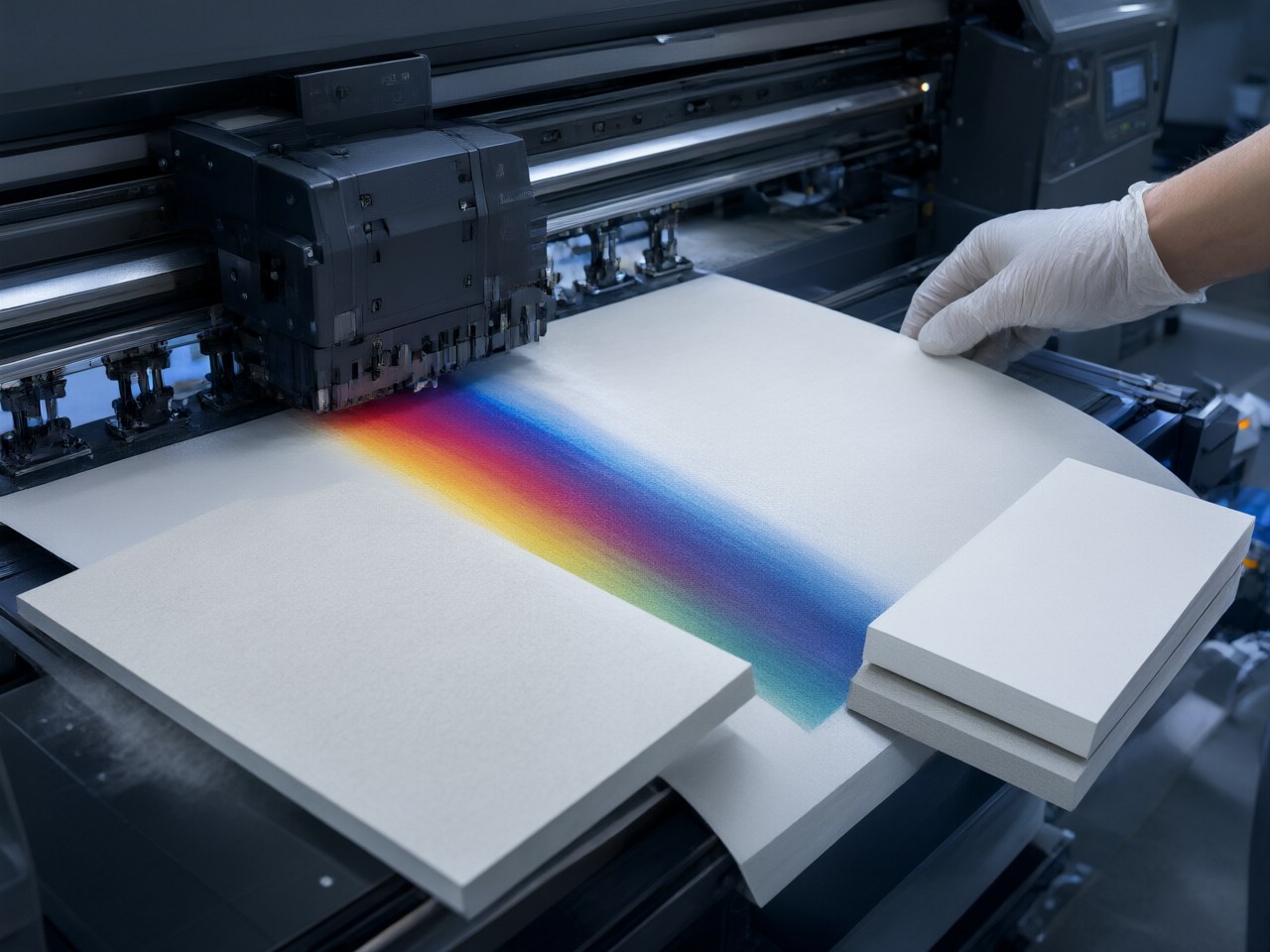
For HP Indigo, choose a listed Flexstone® grade with an I or 2I coating. Do not run 2K grades on HP Indigo. Use FG-2I for unbacked, double-side-coated sheets when the job needs datasheet fields, FM-2I only when HP Indigo suitability and nominal weight are enough, and FG-I15-PSA or FG-I20-PSA for single-sided labels with a medium-tack permanent PSA.
If the job must also run on a dry-toner press, or you need a published sheet size and a published process-temperature rating, use the FG digital-press grades in datasheet NMEQS-MACO 298 (version A0). FM-2I is listed only in the Label & Hang Tag Solutions brochure: HP Indigo only, and nominal weight only. No FS grade is listed for HP Indigo. Catalogue grades are warm-white and opaque. They do not replace clear film, they are not a long-term outdoor substitute for PVC, and they are not a retort substrate.
This guide is documentation-first. Each recommendation below stays inside the source that supports it, so a buyer or brand compliance file can check the claim.
HP Indigo Stone Paper Grades Compared by Model Group and Source Document
Usable HP Indigo grades fall into documented groups. The source document, not caliper alone, decides what you may claim.
| Model group | Coating / sides | Thickness and weight | Listed processes | Sheet size | Temperature data | Source | Limit |
|---|---|---|---|---|---|---|---|
| FG-2I20 / 2I25 / 2I30 / 2I35 | 2I, double-side coated | 0.20 / 0.25 / 0.30 / 0.35 mm; 280±28 / 350±35 / 420±42 / 490±49 g/m² | HP Indigo; this FG digital-press group is also listed for dry toner, UV-curable ink, offset and screen | 460 × 320 mm and 480 × 330 mm; confirm the size on the part number | Long-term 80°C (days); short-term 120°C (minutes) | NMEQS-MACO 298 (A0) | Published weight includes a tolerance around the nominal (thickness × 1.4 × 1000). Process heat rating is not the use-environment limit. |
| FG-I15-PSA, FG-I20-PSA | I, single side, medium-tack permanent PSA | Face and total construction: read the datasheet. Do not calculate weight from the suffix. | Same FG digital-press list as above, on a single-side construction | Same published sheet sizes; confirm the size on the part number | Long-term 80°C (days); short-term 120°C (minutes) | NMEQS-MACO 298 (A0) | Not a two-sided sheet. Suffix is not total caliper. Not WRA and not DPA. |
| FM-2I20 / 2I30 / 2I35 | 2I, two sides | 0.20 / 0.30 / 0.35 mm; nominal 240 / 360 / 420 g/m²; no published tolerance | HP Indigo only | Not published | Not published | Label & Hang Tag Solutions brochure | Do not copy FG sheet size, optics, process temperature, storage, working conditions or dry-toner listing. Nominal weight is not a tolerance band. |
| FS / FG 2K 0.15–0.30 mm (contrast only) | 2K | Per datasheet. Unbacked nominal grammage still follows thickness × density × 1000. | Offset, UV-curable ink, flexo, screen | Per datasheet | FS: long-term 80°C / short-term 100°C. FG: long-term 80°C / short-term 120°C. | NMEQS-MACO 293 (A0) | Not compatible with HP Indigo. Dry toner requires a test. “UV” here is UV-curable ink, not HP Indigo. |
Grade listings for this process sit on the digital press media series page. Part-number logic is explained in Flexstone grades and part numbers. Spec values should be read from the file you will actually issue: downloads.
Grammage Follows Thickness Times Density, Which Lets You Check Press Stock Limits Before Ordering
For unbacked Flexstone grades, nominal grammage ≈ thickness (mm) × density (g/cm³) × 1000. Use it to check a press limit before you order. The formula gives the nominal, not a tolerance band, and it does not apply to PSA constructions. FG-2I grades publish a tolerance on that nominal; FM-2I grades publish nominal weight only.
The density series are FS = 1.0 g/cm³ (soft, light, paper-like), FM = 1.2 g/cm³ (balanced) and FG = 1.4 g/cm³ (stiffer). An FS density does not create an HP Indigo listing, and it does not fill a missing brochure field. Opacity is not ranked by density series; catalogue grades are warm-white and opaque, with opacity published by model group, not by density family.
Nominal checks against that relationship:
- FG-2I20: 0.20 × 1.4 × 1000 = 280 g/m², published 280±28 g/m². FG-2I25: 350±35 g/m². FG-2I30: 420±42 g/m². FG-2I35: 490±49 g/m². - FM-2I20 / 2I30 / 2I35: 0.20 × 1.2 × 1000 = 240 g/m², 0.30 mm → 360 g/m², 0.35 mm → 420 g/m². These are the published nominal weights. The brochure does not publish a tolerance. - FG-2I30 (420±42 g/m²) and FM-2I35 (nominal 420 g/m²) can both sit near 420 g/m² and still differ in caliper and stiffness. Match the part number, not the grammage alone.
What this means on press:
- Grammage and caliper are separate limits. At the same caliper, FG is heavier than FM by the density ratio 1.4/1.2 (about 17% higher grammage). That ratio is arithmetic from the published densities, not a press-approval margin. Confirm both limits on your press substrate specification. A “paper-equivalent” caliper does not mean the press will accept the sheet. - Quotes. Buying by weight and buying by area are different comparisons. Convert to cost per printed sheet. - Do not apply the formula to FG-I15-PSA or FG-I20-PSA. Liner and adhesive add thickness and weight. The same nominal face caliper does not imply the same total construction from one adhesive grade to another. Use NMEQS-MACO 298.
Datasheet Process Windows Define What You Can Claim for Each Grade
A process list or a temperature figure is supported only for the model group whose document prints it.
FG digital-press grades (NMEQS-MACO 298). - FG-2I grades are double-side-coated sheets. Published sheet sizes for this group are 460 × 320 mm and 480 × 330 mm; confirm which size is listed for the part number. - FG-I15-PSA and FG-I20-PSA are single-side grades with a medium-tack permanent PSA. They are the HP Indigo self-adhesive grades in this datasheet. They are not the removable WRA construction and not DPA air-release film. - Published heat resistance for this group is long-term 80°C (days) and short-term 120°C (minutes). On these grades, “UV” means UV-curable ink on a printing press, not wide-format UV inkjet. - This is the only I/2I group for which dry toner, UV-curable ink, offset and screen are also listed. If the shop runs HP Indigo and a dry-toner press, shortlist FG and still trial the actual press. - Finished-product use environment is −20°C to 60°C and 20–80% RH, with a temperature change below 15°C in 30 minutes. That is the use boundary, not the process heat rating. On this datasheet, opened unused material should be resealed and used within one month. The one-month clause is not stated for NMEQS-MACO 293, so do not copy it onto the 2K contrast grades. - Working-environment temperature and storage temperature are not stated here as one band for the group. Those conditions, where a document prints them, belong to the model group in that document. Do not merge them across grades, and do not copy them onto a brochure-only grade.
FM-2I (brochure only). - HP Indigo suitability and nominal weight are what the brochure supports. - Sheet size, optical data, process temperature, storage, working conditions and the one-month opened-pack clause are not published. A quality file should record that gap. Do not borrow FG numbers. - Do not specify an unlisted FS construction in place of FM-2I or FG-2I. If the part number is not FG-2I, FG-I15-PSA, FG-I20-PSA or an FM-2I brochure grade, it is not an HP Indigo grade in this guide.
2K grades (NMEQS-MACO 293), for contrast only. - These are offset, UV-curable-ink, flexo and screen stocks in the 0.15–0.30 mm FS/FG 2K group. The datasheet states that they are not compatible with HP Indigo. Dry toner on this group requires a test. - FS/FG 2K 0.20–0.30 mm rolls in NMEQS-MACO 296 are a wide-format UV inkjet listing. That is a different “UV” from HP Indigo, and it does not make a 2K grade an Indigo sheet. - Do not substitute a 2K grade because the caliper looks right.
Processes no Flexstone document covers — including lamination, foil stamping, heat transfer, sewing, a named varnish and a named finishing adhesive — are not validated parameters. The workable step is a sample trial:
1. Print the job’s real coverage, including heavy solids, on the candidate grade. 2. On 2I sheets, check adhesion on both sides. 3. Check flatness and stack behaviour after printing. 4. Run each finishing step and inspect for curl, delamination or surface marking. 5. For PSA grades, apply the label to the real surface under the planned use conditions and service life.
Press-behaviour background is in Printing on stone paper.
Manufacturer Labels Are Not Third-Party Certifications, and Your Claims Should Say So
“For HP Indigo” in Flexstone documentation is the manufacturer’s process designation. It is not a statement of third-party press-vendor qualification, and it is not a food-contact, medical or fire-rating approval. None of those approvals is published for these grades.
For a brand or regulated file:
- Cite the document, not the brand line. Record the grade, NMEQS-MACO 298 version A0 or the brochure title, and the property you are relying on. - Keep sustainability statements on their own baseline. Figures published by Guangzhou Newlife New Material Co., Ltd. (Newlife) are manufacturer product data, not a third-party life-cycle assessment. Quote each comparison with its stated baseline: versus coated paper, 20–35 tons of water and 20 trees saved per ton; versus BOPP pearlized synthetic paper, 500–650 kg less plastic and 2.4–3.5 tons less CO₂ per ton. Do not merge them into one percentage. - Do not describe Flexstone as biodegradable or compostable. Documented end-of-life routes are shredding and reprocessing, and energy recovery (incineration). Post-consumer recycling depends on local collection and the recycler. See sustainability and end-of-life. - Frameworks such as the US FTC Green Guides (16 CFR Part 260) and Directive (EU) 2024/825 expect environmental claims to be specific and substantiated. That is a claims constraint, not a Flexstone certification.
When Stone Paper Is the Wrong Substrate for an HP Indigo Job
These grades fit indoor tags, labels and other short-life print when the job stays inside the published window. They should not be specified where the requirement sits outside that window.
- Long-term outdoor use. Outdoor durability is lower than PVC. Do not specify Flexstone for long-term outdoor signs or labels, and do not call it weather-resistant or UV-resistant. - A required fire classification. Jobs that need a certified fire rating still need flame-retardant PVC. Do not specify these grades against a fire rating. - A clear film. Catalogue grades are warm-white and opaque. They cannot replace clear film for a no-label look. - Retort and other extreme heat. FG digital-press grades publish 80°C long-term and 120°C short-term as process ratings, and a finished-product use window of −20°C to 60°C. FM-2I publishes no temperature data. None of these grades is a retort or similarly extreme-temperature stock; use PET there. Do not write “120°C” as a Flexstone-wide rating. - Weight-critical mail or freight. Flexstone is denser than PP pearlized film, so at the same thickness it weighs more per square metre. Check the mailed piece and the freight weight. Trade-offs are summarised on the comparison page.
Datasheets, Samples and Press Trials From the Flexstone Team Provide Verifiable Evidence
The selection you can defend is the one where the datasheet value, the sample and your own press trial agree.
The Newlife - Flexstone application engineering team can provide:
- datasheet NMEQS-MACO 298 and the related 2K contrast sheet through downloads; - FG or FM sample sheets matched to the HP Indigo format you name; - help planning a trial for ink coverage, finishing and the end-use environment.
Brochure-only FM-2I can be sampled. Missing fields have to be closed by your own testing before you make a customer-facing claim. Do not fill those fields with FG datasheet numbers. An FS sheet from another process family is not an HP Indigo grade.
Frequently Asked Questions About HP Indigo and Flexstone I / 2I Grades
Can I run 2K stone paper on HP Indigo? No. NMEQS-MACO 293 states that its FS/FG 2K 0.15–0.30 mm grades are not compatible with HP Indigo. Use a listed grade: FG-2I, FM-2I, FG-I15-PSA or FG-I20-PSA. A 2K roll listed for wide-format UV inkjet is still not an Indigo sheet.
Which grade is listed for both HP Indigo and dry toner? The FG digital-press grades in NMEQS-MACO 298, including FG-2I, are listed for dry toner as well as HP Indigo. FM-2I is listed for HP Indigo only. Trial the specific dry-toner press before production.
What should I use for self-adhesive labels on HP Indigo? FG-I15-PSA or FG-I20-PSA. Both are single-side grades with a medium-tack permanent PSA. Read total thickness and weight from NMEQS-MACO 298. Do not treat the “15” or “20” as the total construction.
Does FM-2I have temperature or storage data? No. The brochure publishes HP Indigo suitability and nominal weight only. Do not apply FG process temperature, sheet size or storage figures to FM-2I. The finished-product use boundary of −20°C to 60°C is not a published process-temperature rating for that grade.
Is the “HP Indigo” designation a certification? No. It is the manufacturer’s process designation in Flexstone documents. Record it that way. It is not an HP qualification and not a food-contact, medical or fire-rating approval.
Next Steps to Specify the Right I or 2I Grade
1. Name the press path: HP Indigo only, or HP Indigo plus dry toner or offset. If more than one process is required, shortlist FG grades in NMEQS-MACO 298. 2. Choose double-side unbacked sheets (FG-2I, or FM-2I if nominal weight is enough) or single-side medium-tack permanent labels (FG-I15-PSA or FG-I20-PSA). 3. Check caliper and nominal grammage against the press substrate limits. Do not treat equal grammage as equal caliper. 4. For FG grades, confirm the sheet size on the part number: 460 × 320 mm or 480 × 330 mm. 5. List finishing steps that the datasheet does not cover, and plan a sample check for each one. 6. Define use environment and service life. Keep finished use inside −20°C to 60°C and 20–80% RH, with a temperature change below 15°C in 30 minutes. Do not treat 120°C short-term as a use rating, and do not copy a working or storage temperature from one grade onto another. Confirm the job does not need clear film, a fire rating, long-term outdoor life or retort. 7. Put this in the sample request: press model and ink type, sheet size, thickness and density series, whether you need PSA and what surface it will be applied to, and the use environment and expected service life. 8. Contact the Flexstone team for samples and the relevant datasheet. Use the contact page.
References
1. Guangzhou Newlife New Material Co., Ltd. Datasheet NMEQS-MACO 298, Flexstone FG digital-press grades (version A0). https://www.stonepapers.net/en/downloads 2. Guangzhou Newlife New Material Co., Ltd. Datasheet NMEQS-MACO 293, Flexstone FS/FG 2K 0.15–0.30 mm grades (version A0). https://www.stonepapers.net/en/downloads 3. Flexstone. Label & Hang Tag Solutions brochure (brochure-only source for FM-2I). https://www.stonepapers.net/en/downloads 4. Flexstone digital press media series page (I and 2I grades; not individual model-page URLs). https://www.stonepapers.net/en/products/digital-press-media 5. Flexstone product-data summary. https://www.stonepapers.net/llms-full.txt 6. U.S. Federal Trade Commission. Guides for the Use of Environmental Marketing Claims, 16 CFR Part 260. 7. Directive (EU) 2024/825 of the European Parliament and of the Council as regards empowering consumers for the green transition.